

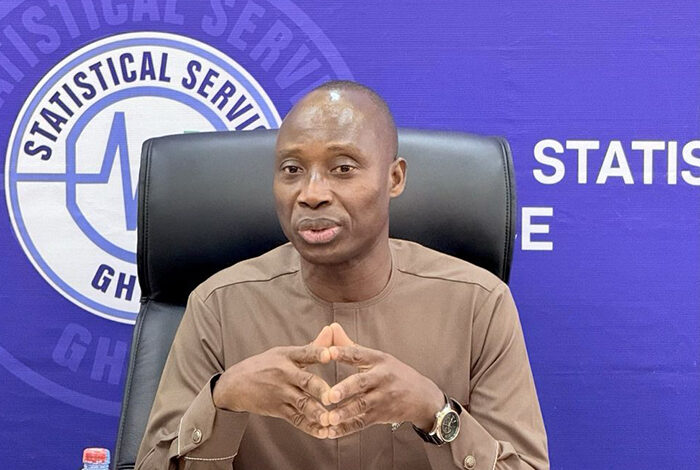

Ghana’s inflation rate fell to 3.3% in February 2026, prompting Government Statistician Dr. Alhassan Iddrisu to assure families they can now plan their budgets with greater confidence.
“This is the ideal time to track spending on essentials like food, rent, and school fees, cut back on non-essential expenses, and tuck away small savings to bolster household finances,” he advised.
The drop marks Ghana’s lowest inflation since the 2021 rebasing—the 14th consecutive monthly decline since January 2025. It shaved 0.5 points off January’s 3.8% and plunged 19.8 points below February 2025’s 23.1%. Overall prices rose just 0.8% from January to February.
Key Inflation Breakdowns
Food inflation dipped to 2.4% from 3.9% in January, with prices up only 0.2% month-to-month.
Non-food inflation edged up slightly to 4.0% from 3.8%, though prices climbed 1.2% month-to-month.
Goods inflation slowed to 3.2% from 3.7% a big relief since goods make up nearly three-quarters of the CPI basket despite a 0.94% monthly price increase.
Services inflation eased to 3.7% from 4.2%, with a modest 0.3% monthly rise.
Locally produced items saw inflation fall to 4.5% from 4.6%, while imported items dropped sharply to 0.6% from 2.0%.
Regional disparities remain stark, with North East at a high of 8.9% and Savannah at a low of -5.6%. Factors like local supply, transport costs, and market access likely fuel these gaps.
Dr. Iddrisu urged the government to maintain fiscal discipline, stabilize food prices, and invest in storage, irrigation, transport, and market access to narrow regional divides.
For businesses, he advised using the breathing room from easing inflation to boost efficiency, fortify local supply chains, trim unnecessary costs, and pass savings on to consumers through steadier prices.
Story by: Mercy Addai Turkson#ahotorfmonline.com


