


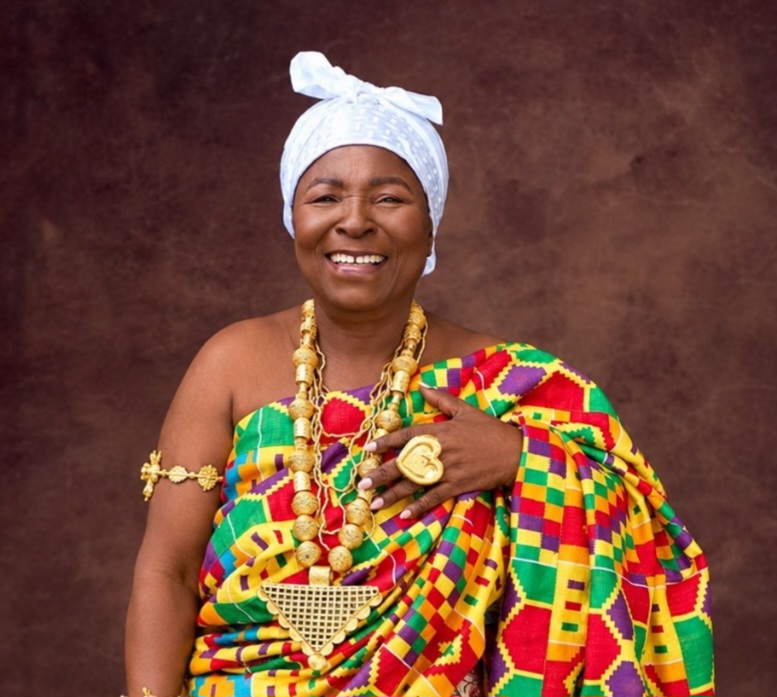
Nana Korama Boatemaa Agyenim Dampankyire Hemaa of the Brakum Traditional Council has recounted the contribution of Ghana’s first Prime Minister and later President, Dr Kwame Nkrumah, to the country’s independence struggle and national development.
Speaking on Ahotor FM’s Ahotor Mmre programme on Monday, September 21, 2026, in Accra/Tema, Nana Korama Boatemaa Agyenim Dampankyire said Dr Kwame Nkrumah was one of the major figures whose determination and political activism helped Ghana move from colonial rule to independence.
She recalled that Kwame Nkrumah was born in 1909 at Nkroful in the Western Region, during the period when the country was known as the Gold Coast.
According to her, Nkrumah pursued his early education before travelling abroad, where he continued his studies in the United States and later in the United Kingdom. During his stay abroad, he became increasingly involved in the struggle for African independence and criticised colonial treatment of Africans.
She explained that Nkrumah’s activism attracted the attention of Ghanaian nationalists who were already organising against colonial rule.
Among the prominent nationalists were J.B. Danquah, Ako Adjei and other members of what later became known as the Big Six. The United Gold Coast Convention (UGCC) was formed at Saltpond in 1947, with the objective of pursuing self-government for the Gold Coast.
Nkrumah returned to the Gold Coast and became the UGCC’s general secretary. However, Nana Korama said differences soon emerged between Nkrumah and other leaders over the pace at which self-government should be achieved.
While some leaders supported a gradual approach, Nkrumah advocated for “Self-Government Now.”
His position attracted considerable support, particularly among the youth and ordinary people. His political activities also brought him into conflict with the colonial authorities.
Following the break with the UGCC, Nkrumah established the Convention People’s Party (CPP) in 1949. The party adopted the demand for immediate self-government and embarked on mass mobilisation.
Nana Korama noted that Nkrumah’s political activism eventually contributed to his arrest and imprisonment by the colonial authorities.
However, the CPP continued its political activities, and in the 1951 election, the party won a decisive victory. Nkrumah, who was still in detention at the time, was released and subsequently became Leader of Government Business, later becoming Prime Minister.
She said Nkrumah continued to lead the country towards full independence, culminating in Ghana’s declaration of independence from British colonial rule on 6 March 1957.
Nana Korama further highlighted Nkrumah’s development agenda, particularly his emphasis on industrialisation, education, infrastructure and African unity.
Among the major development projects and institutions associated with the Nkrumah era were the Akosombo Dam, Tema industrial development, the Tema Development Corporation, expansion of port infrastructure, the Komenda Sugar Factory, the Akosombo Textiles and other industrial initiatives.
She also recalled Nkrumah’s efforts to expand educational opportunities and provide scholarships that enabled Ghanaians to pursue professional training abroad.
According to her, Nkrumah’s vision extended beyond Ghana because he strongly believed that the country’s independence would have limited meaning if other African countries remained under colonial rule.
She said his commitment to Pan-Africanism made African unity one of the central themes of his political philosophy.
Nana Korama also referred to Nkrumah’s relationship with other African liberation leaders, including Patrice Lumumba, and his broader efforts to support the independence and liberation struggles across the African continent.
She further recalled that Nkrumah’s government was overthrown in a military coup in 1966 while he was on a peace mission to Asia.
After the coup, Nkrumah went into exile in Guinea, where President Ahmed Sékou Touré offered him refuge and appointed him co-president of Guinea.
Nkrumah died on 27 April 1972 in Bucharest, Romania, at the age of 62.
Nana Korama said the legacy of Dr Kwame Nkrumah should continue to be discussed, particularly his contribution to Ghana’s independence, national development and the Pan-African movement.
She stressed that remembering Ghana’s history should involve recognising the contributions of the different individuals and movements that participated in the country’s struggle for self-government and independence.
By Stephen Kwaku Owusu Mintah


