


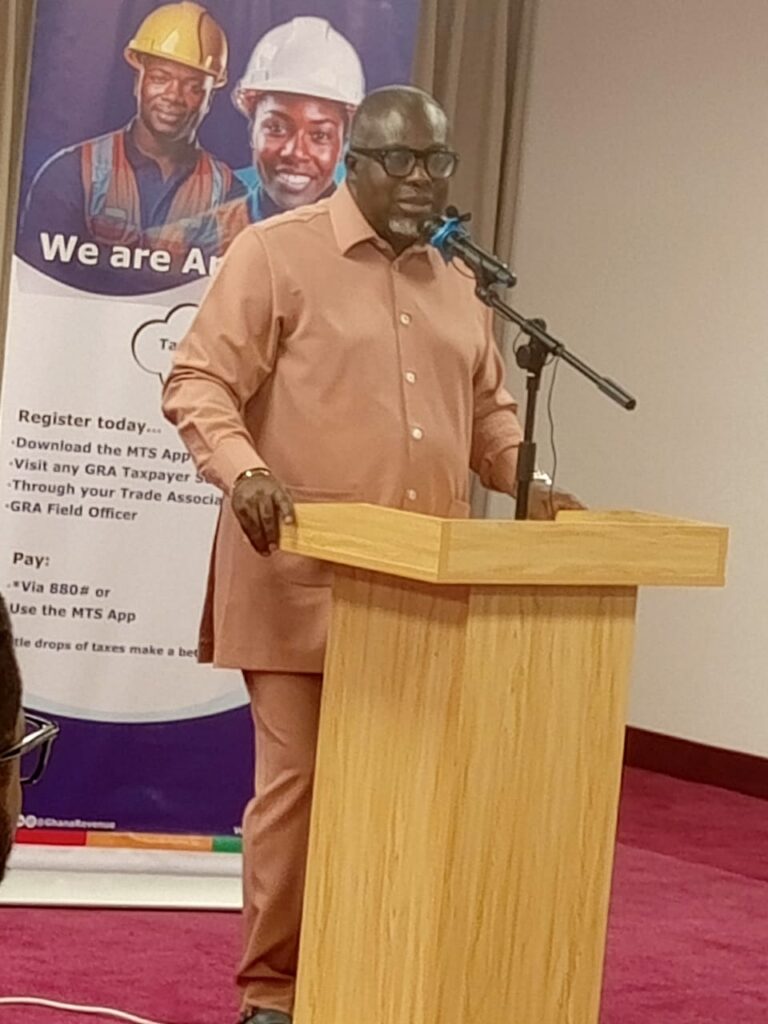
The Commissioner‑General of the Ghana Revenue Authority (GRA), Anthony Kwasi Sarpong, said that reforms are taking place in income‑tax and customs procedures to ensure easy compliance.
He explained that the GRA is deploying technology and expanding taxpayer education to ease the challenges of tax compliance.
“By deploying technology, we can provide more education that simplifies the tax‑compliance system and reduces challenges”.
He added, “Tax compliance is a civil duty; technology makes it convenient and simpler.”
He also noted that compliance is a partnership between the GRA and society to advance the agenda of improved infrastructure.
During a media interaction in Accra, Mr. Sarpong emphasized the need to ensure that every citizen understands the role of taxation in society: “There are areas where we are deploying technology. This means we must explain how it works to the ordinary Ghanaian taxpayer so they can fulfil their civil responsibility.”
Mr. Sarpong said this would require a whole‑scale change in management, involving education. Without simple explanations and awareness, voluntary compliance will remain difficult.
A member of the Modified Taxation Scheme (MTS) project, Mr. Victor Yaw Akogo, stated that the informal sector accounts for over 70 % of the active workforce but contributes only about 30 % to GDP, while its contribution to the tax net is less than 5 %.
He called for collaboration to help the informal sector understand the need to contribute to the tax net. He explained that the GRA’s mandate is to promote tax compliance and educate taxpayers about their obligations, payments, and building a better Ghana.
He said the MTS is a simplified taxation mode that caters to three categories of taxation within the informal sector: (1) presumptive tax based on instalments, (2) presumptive tax based on turnover, and (3) a modified cap‑based tax.
Dr. Birago Antwi‑Adjei of the GRA team noted that it is estimated only about 1.2 million people are registered for tax compliance in the country, highlighting the need to increase this number. She stressed that education, rather than enforcement, is the key to improving compliance, which has been the mainstay over the years.
Source: Godfred Sey@Ahotoronline.com


