


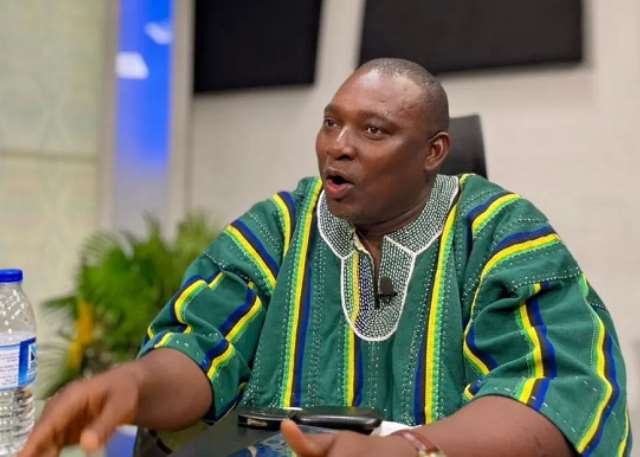
The Director of Communications for the United Party, Solomon Owusu, has expressed strong reservations about some of the key recommendations contained in the Constitutional Review Committee’s report, arguing that they could have serious implications for Ghana’s democracy and national security.
Speaking on Ahotor FM’s Adekyee Mu Nsem programme with Citizen Kofi Owusu in Accra, Mr. Owusu said his party disagrees with the proposal to allow dual citizens to occupy sensitive public offices, including Member of Parliament, Chief of Defence Staff (CDS), and Inspector-General of Police (IGP).
According to him, the recommendation is not in the best interest of the country and appears to serve narrow political interests rather than the national good.
He questioned where the allegiance of a dual citizen serving as Chief of Defence Staff would lie in the event of an international conflict involving Ghana.
“If the Chief of Defence Staff is both Ghanaian and American, for example, and a conflict arises, which country will that person owe ultimate allegiance to?” he asked.
Mr. Owusu argued that individuals who genuinely wish to serve Ghana in such strategic positions should be prepared to renounce any other citizenship they hold before assuming office.
He also urged the government to reconsider the advice reportedly given by the Council of State on the matter, insisting that the recommendation could create dangerous precedents for future generations.
On governance, the United Party Communications Director renewed calls for the separation of the Executive from the Legislature. He argued that ministers should not simultaneously serve as Members of Parliament because the current arrangement weakens Parliament’s constitutional oversight responsibility.
According to him, ministers who approve government decisions in Cabinet later return to Parliament to vote on the same policies, thereby undermining the principle of checks and balances.
“You cannot approve a policy in Cabinet and then come to Parliament to supervise or scrutinise that same decision. That is not effective accountability,” he stated.
Mr. Owusu further welcomed the proposal to cap the number of Members of Parliament at 300 but suggested that any additional parliamentary seats should be allocated in a manner that gives smaller political parties a fair opportunity to gain representation and promote political diversity.
He also reiterated his support for the election of Metropolitan, Municipal and District Chief Executives (MMDCEs), saying the appointment system has negatively affected successive governments.
He maintained that allowing citizens to elect their MMDCEs would improve accountability, enhance local governance, and accelerate development at the grassroots level.
Mr. Owusu dismissed concerns that elected MMDCEs from opposition parties could undermine the central government, arguing that voters would hold such officials accountable through democratic elections if they failed to perform.
He concluded that Ghana’s constitutional reforms should focus on strengthening democratic institutions, enhancing accountability, and protecting the country’s long-term national interest rather than advancing partisan or personal considerations.
Story By Stephen Kwaku Owusu Mintah/Ahotoronline.com/Accra


