


In the sweltering summer of the 2026 FIFA World Cup, Argentina once again reminded the world why they are perennial contenders. Defending their 2022 crown, Lionel Messi’s side navigated a treacherous knockout path that featured genuine scares and heart-stopping comebacks. Yet the tournament also exposed a persistent, uneven lens through which football narratives are shaped—particularly when African teams are involved.
The premise is straightforward but revealing: Cape Verde and Egypt took Argentina right to the edge in the early knockout rounds. Both led or matched the champions at key moments, only to see the game slip away late. Social media and some commentary quickly diagnosed a familiar ailment—“weak mentality,” “bottling it,” or the perennial inability of African sides to “finish the job.” Fast-forward a few matches, and the same Argentina trailed England deep into their semi-final before producing a trademark late surge to reach the final against Spain.
Suddenly, the discourse shifted to “unbreakable spirit” and “Messi magic.” The contradiction invites scrutiny: does the “weak mentality” label hold water, or does it simply reflect whose jersey is being worn?
Cape Verde: The Giant-Killers Who Nearly Rewrote History
On 3 July in Miami, tiny Cape Verde—making deep inroads in their first-ever World Cup—embodied everything thrilling about the expanded 48-team format. Messi gave Argentina a first-half lead, but the Blue Sharks roared back. Deroy Duarte leveled, and in extra time Sidny Lopes Cabral produced a moment of brilliance to make it 2-2. Only a deflections off Diney Borges in the 111th minute handed Argentina a 3-2 victory after extra time.

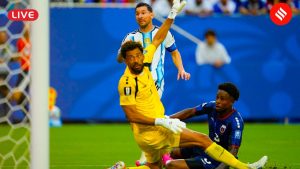
Cape Verde’s players left the pitch with heads high, having come within minutes of one of the greatest upsets in tournament history. For a nation smaller than many cities, reaching the Round of 32 was already a triumph of organization, diaspora talent, and belief. Yet post-match chatter in pockets of football Twitter and punditry circled back to African teams’ supposed fragility under pressure. The praise for their bravery coexisted uneasily with the old trope: they couldn’t hold on.
Egypt: Two Goals from Glory, Then the Argentine Storm
Four days later in Atlanta, Egypt delivered an even sharper test. Yasser Ibrahim opened the scoring early, and Mostafa Ziko doubled the lead in the second half. Argentina looked vulnerable—Messi missed a penalty—and Egypt were minutes from a historic quarter-final berth. Then the comeback machine activated: Cristian Romero, Messi, and Enzo Fernández (with the tournament’s 3,000th World Cup goal) turned 0-2 into 3-2 in a whirlwind final 15+ minutes.


Egypt exited with immense credit for their tactical setup and fearlessness. Yet again, segments of the conversation defaulted to “another African side letting a lead slip” rather than celebrating the champions’ quality or Egypt’s ability to dominate large portions of the match against the holders. The pattern was clear: resilience when trailing = champion DNA; resilience when leading but ultimately losing = mental question marks.
Argentina’s Mirror: The Comebacks That Silenced (Some) Critics
Argentina’s subsequent path mirrored the very vulnerabilities they had exposed in their African opponents.
In the quarter-final against Switzerland, the Swiss equalized and forced extra time. Argentina needed a moment of brilliance from Julián Álvarez and a late Lautaro Martínez strike to prevail 3-1.


Then came the semi-final masterpiece against England. Anthony Gordon’s second-half goal put the Three Lions in dreamland. With the clock ticking, Enzo Fernández and Lautaro Martínez (again) delivered late drama, assisted by the ageless Messi, to complete a 2-1 turnaround and book a final date with Spain.
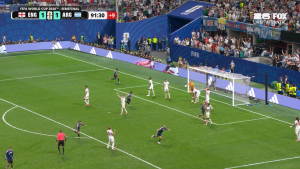
These were not walkovers. They were gritty, character-testing affairs in which Argentina trailed or were pegged back by capable opponents. The football world rightly applauded the champions’ mental fortitude, squad depth, and ability to produce when it mattered most. The double standard, however, was glaring: the same late-game traits that drew criticism when displayed (or failed) by Cape Verde and Egypt became virtues when shown by La Albiceleste.
Unpacking the “Mentality” Debate
Football “mentality” is real—composure under fatigue, tactical adaptability, belief when behind—but it is not a fixed national trait. It emerges from experience, squad quality, coaching, resources, and plain luck. Argentina benefited from a core forged in multiple major finals, playing regularly at the highest intensity, and possessing match-winners capable of individual genius. Cape Verde and Egypt, while talented and well-prepared, operated with narrower margins for error and less cumulative big-stage exposure.
Blaming losses after leading strong favorites on “weak mentality” ignores structural realities. African football has produced heroic runs (Morocco’s 2022 semi-final leap stands out) and continues to improve with better domestic leagues, European-based talent pools, and tactical evolution.
Yet the narrative reflex persists: physical athleticism yes, mental steel no. When European or South American sides show the same fluctuations—England’s historical semi-final heartbreaks, various Dutch or Italian collapses—it is framed as “bad day at the office,” “bad luck,” or “learnings for next time.”
Social media amplified the divide in 2026. Clips of Egyptian or Cape Verdean leads were paired with memes about “bottling,” while Argentina’s late winners spawned montages of “warriors” and “never say die.” Some Argentine fans faced accusations of unsporting behavior toward African supporters, adding an uncomfortable edge to the cultural conversation.
The Real Lesson from Argentina’s Run
Argentina’s route to the final was no indictment of their African opponents—it was validation of how competitive modern football has become.
Cape Verde and Egypt forced the champions into their most uncomfortable moments. Their ability to lead and compete at that level reflected growing strength, not fragility. Argentina’s comebacks reflected elite-level problem-solving, not proof that only certain continents possess character.
The weight of the “weak mentality” argument is light. It thrives on selective memory and cultural shorthand more than match evidence. Every team in a World Cup knockout is one mistake from elimination; the difference often comes down to squad depth and individual moments rather than collective psychological deficiency.
As Argentina prepare for Spain in the final, their journey stands as a testament to resilience—exactly the quality that should also be afforded to the sides who pushed them hardest. Football’s beauty lies in these narrow margins and dramatic reversals, not in dividing the world into those who supposedly have “it” and those who supposedly don’t. In 2026, both the champions and their early challengers from Africa showed they belong on the same grand stage. The rest is just noise.
By Bright Boabeng Jnr(Ahotor 92.3 FM)


