


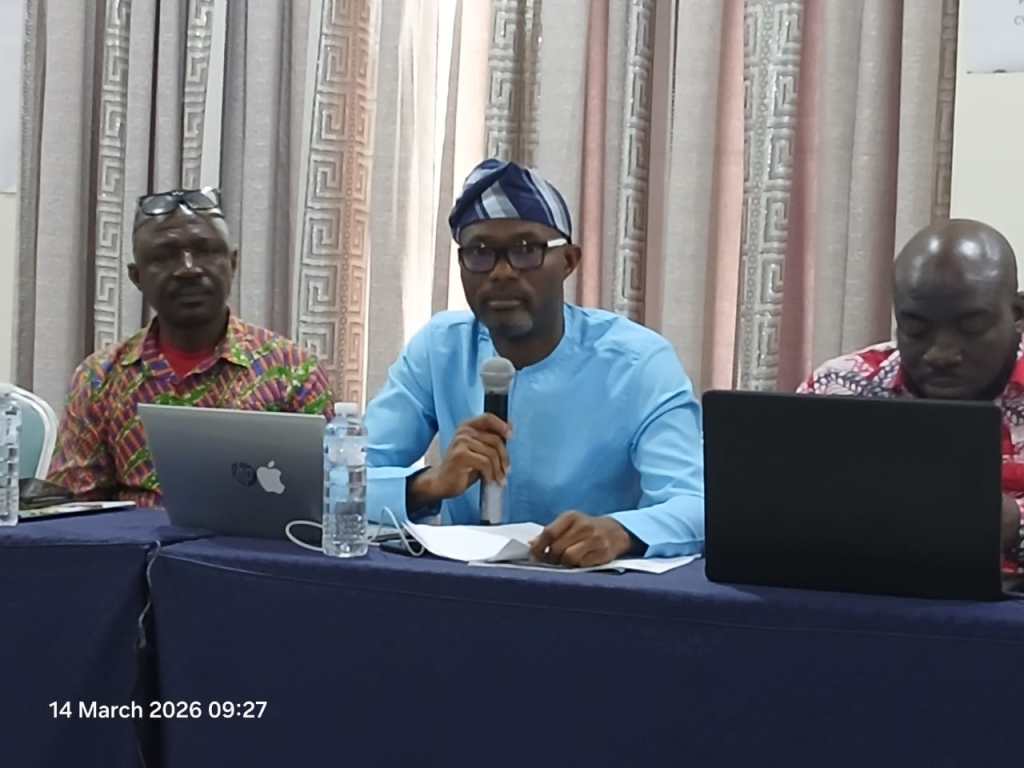
Simon Agianab, Dean of the Parliamentary Press Corps, rose to the podium. His voice, steady as the ancient baobab trees of the savanna, cut through the murmur. “Distinguished representatives of the World Bank and FCDO, Honourable organizers, Members of the Parliamentary Press Corps, Invited guests, Ladies and Gentlemen,” he began, his eyes sweeping the room like a lighthouse beam over turbulent seas. “It is a privilege and an honour to address this distinguished gathering at the opening of this important capacity-building workshop.”
The room fell silent, the weight of his words settling like morning mist over the Akosombo Dam. Simon paused, his gaze lingering on the organizers. “I wish to express our profound gratitude to you—particularly the World Bank and FCDO—for this timely initiative, sponsored alongside the Commonwealth and Development Office and the UK Government. It has paved the way for stakeholders to share their thoughts, strengthening the professional capacity of journalists who report on Parliament’s vital work. Your continued support for media development and democratic governance in Ghana is deeply appreciated.”
He leaned forward, his hands gripping the podium as if anchoring himself to the nation’s heartbeat. The Parliamentary Press Corps, he explained, stood as a unique bridge in Ghana’s democratic architecture—a vital link between the hallowed halls of Parliament and the everyday citizens whose lives hung on every vote, every debate. “As journalists assigned to cover the work of Parliament,” Simon continued, his tone rising with passion, “we don’t just report proceedings. We interpret complex legislative mazes and policy thickets, distilling them into stories that resonate with the market trader in Accra, the farmer in Tamale, the student in Kumasi.”
The room nodded, for they knew the stakes. In today’s fast-paced world of dynamic governance and economic storms—where fiscal policies crashed like Atlantic waves and public financial management hid behind jargon fortresses—their role had grown fiercer. “Economic policies, fiscal decisions, and public expenditure debates arrive in technical armor that baffles the ordinary citizen,” Simon said, his voice a clarion call. “That’s why we need the knowledge and tools to pierce that armor, to communicate clearly and truthfully.”
This workshop, he declared, was their beacon—a two-day odyssey sponsored by these generous partners, offering a chance to master key economic concepts: public debt management, the national budget statement, the Medium-Term Expenditure Framework, Auditor-General reports, and more. Simon painted the picture vividly: Imagine covering the budget presentation, the fiery fiscal policy debates, the scrutiny of public spending. These were the pulse of national development, yet their complexity often left the public adrift. “Through this gathering,” he promised, “we’ll gain the clarity to craft accurate, insightful reports that bridge the gap—fostering understanding, demanding accountability, and empowering democracy.”
Confidence lit his face like dawn over the Volta River. “Distinguished organizers and participants, the knowledge we’ll harvest over these two days will enrich our craft and elevate Parliamentary reporting across Ghana.” On behalf of the Corps, he pledged their full commitment—active participation, eager learning, constructive engagement with resource persons.
As applause swelled, Simon concluded with a bow of gratitude. “Once again, sincere thanks to the World Bank, FCDO, and all partners. Your investment in us fortifies transparency and governance in our beloved Ghana. May God bless our homeland Ghana and make it great and strong.”
“Thank you. Peace to you all.”
Source: Collins Owusu Debrah


