


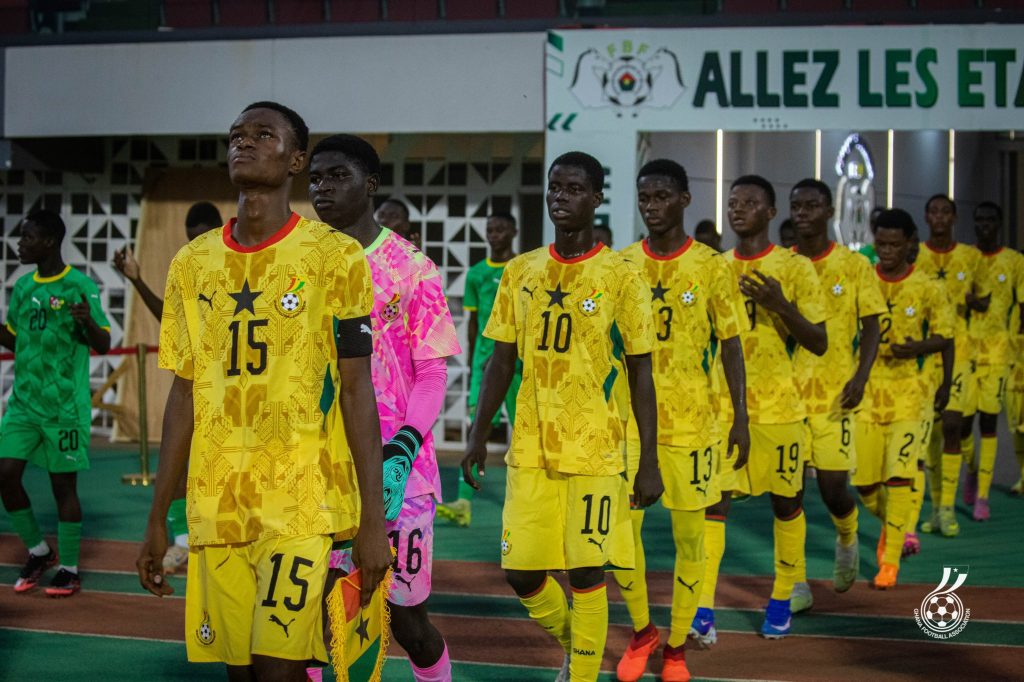
Ghana’s Black Starlets have suffered a setback in their quest to return to the FIFA U-17 World Cup after losing 1–0 to Ivory Coast in the WAFU Zone B U-17 Championship.
The defeat has ended Ghana’s hopes of securing qualification through the regional tournament, leaving the young national team facing disappointment after entering the competition with the ambition of progressing to the continental stage and earning a place at the global youth showpiece.
A Costly Defeat for Ghana
The 1–0 result against Ivory Coast proved decisive for the Black Starlets, who needed a positive outcome to keep their qualification hopes alive. In a competition where the margins between success and elimination can be extremely narrow, a single goal was enough to separate the two West African rivals.
For Ghana, the loss represents more than a disappointing result against a regional opponent. It also means the team will not be part of the next stage of the qualification pathway leading to the FIFA U-17 World Cup.
Ivory Coast, meanwhile, secured the victory that Ghana could not prevent, strengthening the Ivorian side’s position in the regional contest.
Ghana’s Youth Football Ambitions Suffer a Blow
The Black Starlets occupy an important place in Ghanaian football history. The country has a proud tradition of developing talented young players who have gone on to represent the senior national team and compete at major international tournaments.
Ghana won the FIFA U-17 World Cup in 1991 and 1995, becoming the first African nation to win the competition twice. Those achievements helped establish the Black Starlets as one of the country’s most celebrated youth teams.
Against that historical background, missing out on another World Cup qualification opportunity will inevitably raise questions about the current state of youth development, talent identification, technical preparation and the team’s ability to compete consistently against the strongest sides in the region.
However, one defeat alone cannot explain the broader challenges facing Ghanaian youth football. A meaningful assessment would require a closer examination of the team’s performances throughout the tournament, its preparation, player development pathways and the quality of opposition encountered.
The Importance of the WAFU Zone B Championship
The WAFU Zone B U-17 Championship provides a competitive platform for young footballers from West Africa to demonstrate their abilities and compete for opportunities at higher levels.
For participating countries, the tournament is not simply about winning regional honours.
It is also an important stage in the development of young players, offering exposure to competitive international football and helping national teams assess the progress of their youth programmes.
Qualification for the FIFA U-17 World Cup can provide players with invaluable experience against some of the world’s most promising young footballers. Missing that opportunity means Ghana’s current crop of Starlets will lose the chance to gain that particular level of international exposure through this qualification route.
What Happens Next for the Black Starlets?
With the World Cup qualification objective now out of reach, the focus must shift towards reviewing the campaign and identifying areas for improvement.
The technical team and football authorities will need to assess the players’ performances, identify the causes of the elimination and determine how best to support the next generation of Ghanaian youth internationals.
The immediate disappointment should also be placed in perspective. The players remain young, and their development should not be judged solely by the outcome of one tournament. For some, the experience may provide valuable lessons that support their progress into senior football.
Nevertheless, Ghana’s failure to qualify is a reminder that the country’s historic achievements at youth level cannot guarantee future success. Sustained investment, effective coaching, competitive exposure and a clear development pathway are essential if the Black Starlets are to challenge consistently for major honours again.


