


Cocoa farmers in parts of the Ashanti Region have welcomed the passage of the Ghana Cocoa Board Bill, 2026, describing the reforms as important steps towards protecting farmers and ensuring the long-term sustainability of Ghana’s cocoa industry.
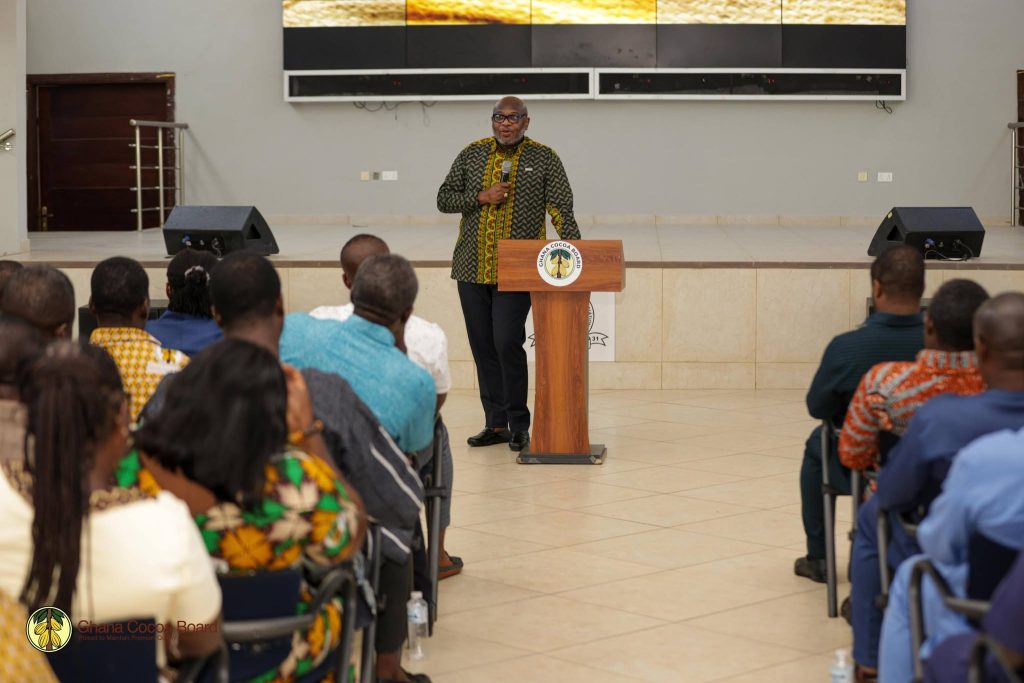
The farmers, drawn from Juaben, Asiwa, Juaso and Konongo, expressed their support during a stakeholder sensitisation rally organised by the Ghana Cocoa Board (COCOBOD) at Konongo.
The engagement, which attracted more than 400 participants, was aimed at providing farmers with accurate information about the new legislation and addressing concerns surrounding its implementation.
Officials from COCOBOD, led by the Executive Director of the Cocoa Health and Extension Division (CHED), Dr. Richard Adu Acheampong, and Deputy Head of Public Affairs, Benjamin Teye Larweh, explained the rationale behind the Bill, its major provisions and expected benefits.
Among the key areas highlighted were farmer welfare, producer pricing, protection of cocoa farms, illegal mining, cocoa smuggling, sector financing, the Cocoa Farmers Pension Scheme, educational support for farmers’ children, local processing and improved governance.
Misconceptions Clarified
COCOBOD officials also sought to dispel claims that the new law would prevent farmers from cultivating food crops on their cocoa farms or give COCOBOD ownership of cocoa farms.
Farmers were assured that compatible food crops can still be cultivated alongside cocoa, particularly during the early stages of establishing young cocoa farms.
Officials also clarified that the Bill does not transfer ownership of farmers’ lands to COCOBOD. Instead, its protective provisions are intended to safeguard cocoa farms from unlawful destruction and permanent conversion, particularly through illegal mining and other activities.
MCE Commends COCOBOD
The Municipal Chief Executive for Asante Akim North, Hon. Sarah Amoako, commended COCOBOD for taking the sensitisation exercise directly to cocoa-growing communities.
She stressed that grassroots engagement was necessary to enable farmers to understand the reforms and seek clarification on issues affecting their livelihoods.
The MCE also highlighted the provision seeking to refocus COCOBOD on its core mandate by restricting the institution from undertaking quasi-fiscal activities, including the construction of cocoa roads.
She therefore urged farmers and residents to engage their respective Metropolitan, Municipal and District Assemblies on road infrastructure and other development needs.
According to her, this would allow COCOBOD to concentrate its resources on regulating, developing and promoting Ghana’s cocoa industry while local and central government institutions handle broader community development responsibilities.
Farmers Demand Continued Engagement
The farmers actively participated in the discussions, raising questions about the Cocoa Farmers Pension Scheme, education support, illegal mining, cocoa roads, compensation, agricultural financing, weighing scales, planting materials, farm rehabilitation and farmer participation in decision-making.
They welcomed the reforms but called for continued sensitisation and consultation to ensure that cocoa farmers across the country fully understand the new legal framework and how it will affect their livelihoods.
Story by Stephen Kwaku Owusu Mintah/Ahotoronline/Accra


