


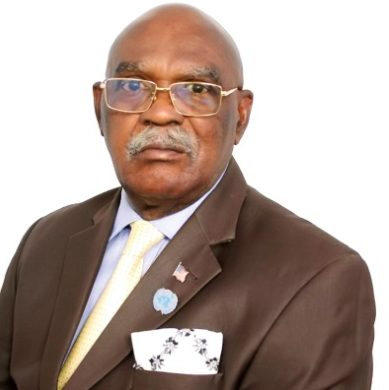
High Commissioner and Continental Vice President of the U.N.I.P.G.C.-USA, Global Humanitarian Peace Mediator, Ambassador and renowned security and conflict-resolution expert, Amb. Prof. Dean Roberts Jnr. has called on Africans and people of African descent across the world to embrace unity and refuse to allow the painful history of slavery to continue dividing them.
He said Africans must move beyond viewing the continent and its people through the lens of historical exploitation and instead work towards building a united African family and one strong nation.
Amb. Prof. Roberts Jnr. made the call at the internationally acclaimed Ibiaku Clan Development Association family retreat at the Plush Villa Hilton Hotel in Uyo, Akwa Ibom State, Nigeria, held under the theme “Reclaiming Our Story— Ibiaku History, Identity and Heritage.”
His remarks followed President John Dramani Mahama’s address at the United Nations General Assembly in New York, where the Ghanaian President described the Trans-Atlantic Slave Trade as “the gravest crime against humanity” and called for greater recognition of the suffering endured by Africans and their descendants.
According to Amb. Prof. Roberts Jnr., he does not consider himself a victim of history but rather a survivor of one of humanity’s gravest crimes and a beneficiary of the resilience and survival of Africans in the Diaspora.
Speaking on the UN resolution concerning the Trans-Atlantic Slave Trade, he said 123 out of 178 member countries voted in favour of the resolution, while three voted against it and 52 abstained.
He said the resolution was adopted on the same day President Mahama called on the international community to honour the victims and ancestors of the slave trade by affirming that the trafficking and enslavement of nearly 13 million human beings constituted one of the gravest crimes against humanity.
Amb. Prof. Roberts Jnr. explained that the slave trade did not only involve the physical movement of Africans but also caused enormous damage to African families, communities, clans and identities.
He said the system deliberately weakened African societies through what he described as a strategy to “divide, conquer and export” precious human capital.
He noted that families were broken apart, names and identities were lost, clans were weakened and millions of Africans were forcibly taken to America, the Caribbean and other parts of the world under brutal and inhumane conditions.
The renowned criminologist stressed that the painful history should not be allowed to become a permanent source of division among Africans.
Instead, he urged Africans everywhere to use their shared history as a basis for unity, cooperation and development.
He said reclaiming Africa’s story must involve preserving the history and heritage of individual communities while also strengthening the bonds that connect Africans across the continent and in the Diaspora.
Amb. Prof. Roberts Jnr. further called on the people of Ibiaku to take ownership of their destiny by investing in their people, protecting their cultural heritage and building strong institutions that can benefit future generations.
In his closing remarks, Amb. Prof. Roberts Jnr. pledged to continue speaking about the history and identity of Ibiaku at international platforms.
He expressed confidence that with maximum cooperation from the God-fearing and proud citizens of Ibiaku and Mkpat in Akwa Ibom State, both at home and abroad, the community could achieve significant development.
He also highlighted the importance of working with the new-generation diplomat and Ambassador-at-Large, Amb. Dennis Ufot, a United Nations Peace Ambassador, whom he described as a person of integrity, exemplary dignity and selfless leadership experience in international affairs.
Amb. Prof. Roberts Jnr. said the collective efforts of the people, supported by responsible leadership, could help create a new future for Ibiaku.
He concluded that Ibiaku must no longer “export her destiny” but must instead develop its human and material resources to their full potential for the benefit of its people and future generations.
Story by Stephen Kwaku Owusu Mintah/Ahotoronline/Accra.


