

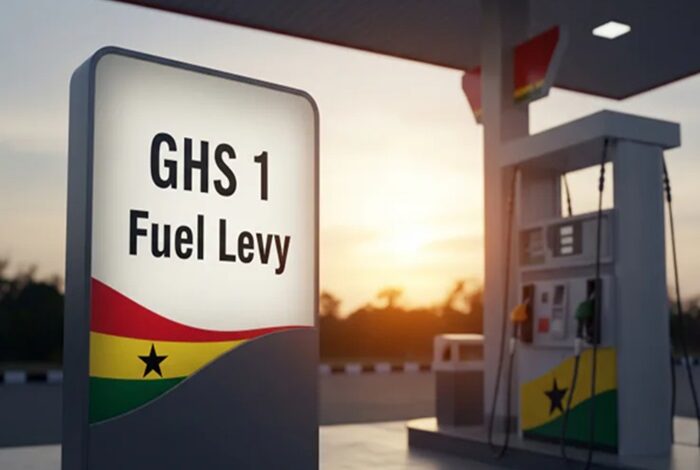

The Association of Ghana Industries (AGI) has called on government to immediately abolish the GH¢1 fuel levy, arguing that the tax is sharply increasing production and operational costs for businesses nationwide.
The appeal comes at a time of surging international fuel prices, which the AGI says have been worsened by ongoing geopolitical tensions, including the US–Israel conflict involving Iran.
Addressing a high-level meeting with the Minority in Parliament on Wednesday, April 1, AGI President Kofi Nsiah-Poku cautioned that companies may be compelled to pass on rising costs to consumers if the levy is retained.
“Fuel prices have gone up by more than 30 percent. It is important that we begin discussions on removing the GH¢1 levy to ease our operational costs,” he said.
He further warned that maintaining the levy could undermine recent macroeconomic gains, especially the relative stabilisation of the cedi, as higher fuel costs risk wiping out those improvements.
“If nothing is done, we may have no option but to adjust prices, which we do not want to do. We do not want a situation where the impact of the cedi will now be balanced by fuel prices and therefore, we come back to square one,” he added.
Former AGI President Humphrey Ayim-Darke, for his part, called for a thorough, data-driven evaluation of the levy before any final decision, insisting that its original objectives and impact must be clearly assessed.
He demanded clarity on how much revenue has been realised from the levy, how the funds have been applied, and whether the policy has achieved its intended targets.
“In the computation of tariffs, we know there is fuel in the formula. What sort of fuel are we using in the computation of tariffs? So, what have you accumulated from the GH¢1, what has it been used for? Have you met the target? If you have, then we can advocate for the scrapping of the levy. If you haven’t, what are the timelines? Then it becomes scientific, the intent and the achievement,” he stated.
The AGI maintains that reviewing and ultimately addressing the GH¢1 charge is crucial to easing the cost burden on industry and curbing further hikes in the prices of goods and services.
The GH¢1 fuel levy, officially known as the Energy Sector Shortfall and Debt Repayment Levy, is imposed on every litre of petroleum products sold in Ghana.
Introduced in 2025, the levy is projected to generate about GH¢5.7 billion annually to help clear legacy energy sector debts and support fuel procurement for thermal power plants to avert power outages.
Story by: Mercy Addai Turkson#ahotorfmonline.com


