


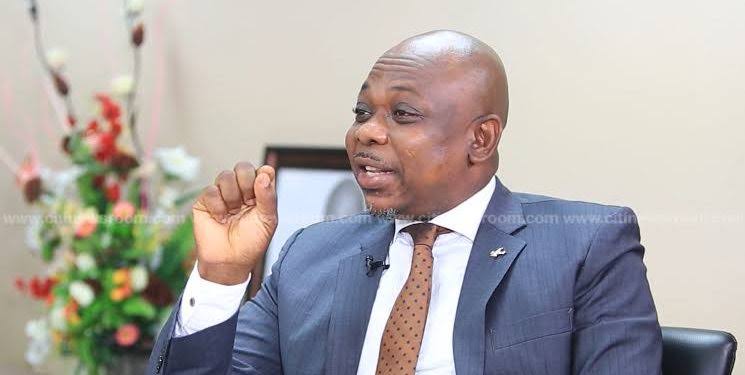
Majority Leader in Parliament, Hon. James Agalga, has described the Minority Caucus’ call for a parliamentary probe into major narcotics seizures linked to Ghana as unnecessary, arguing that government and the relevant security agencies are already taking steps to address the issue.
His comments follow Parliament’s emergency sitting on Tuesday, September 29, 2026, after Speaker Alban Sumana Kingsford Bagbin recalled the House from recess pursuant to Article 112(3) of the 1992 Constitution and Order 53 of Parliament’s Standing Orders. The Speaker had summoned the House to sit at noon on Tuesday.
The recall followed a petition by the Minority Caucus, led by First Deputy Minority Whip and Tolon MP, Hon. Habib Iddrisu, which raised what the Caucus described as urgent national security concerns over a series of major narcotics seizures linked to consignments from Ghana.
Among the cases cited was the seizure of nearly 3.9 metric tonnes of cocaine by French Customs at the Port of Dunkirk on September 10, 2026, from a container that had departed Ghana. The Minority also cited the seizure of about 320 kilogrammes of methamphetamine by Australian authorities in June 2026, alongside other narcotics interceptions in Ghana.
The Minority wanted Parliament to establish an Ad Hoc Committee to examine how the consignments were processed, inspected and cleared, including the effectiveness of intelligence profiling, scanning and Customs procedures.
The proposed inquiry was also expected to examine the identities and roles of companies, state agencies and other entities involved, assess the adequacy of Ghana’s security systems at ports and other entry points, and establish the status of investigations, arrests, prosecutions and international cooperation.
However, Mr Agalga maintained that a parliamentary investigation at this stage would be premature because security agencies are already investigating the cases.
According to him, government has intensified cooperation with international partners, including authorities in France, Belgium, Australia, the Netherlands and South Africa, through mutual legal assistance and joint investigative efforts.
He said discussions had also been initiated with French authorities following the Dunkirk seizure.
Government measures
Mr Agalga further pointed to the establishment of a Border Security and Narcotics Control Task Force by President John Dramani Mahama to bring together relevant security and intelligence institutions to strengthen coordination, assess emerging threats and identify trafficking networks.
He also highlighted the restoration of the Narcotics Control Commission (NACOC) to the Joint Container Inspection process at Ghana’s ports.
According to the Majority Leader, the measure will make specialist narcotics intelligence, risk profiling, detection and investigative expertise available during the examination of high-risk consignments.
He said the government’s focus was on moving towards a more intelligence-led and preventive approach in which suspicious consignments could be identified and disrupted before leaving Ghana.
Mr Agalga said the ultimate measure of the interventions would be results, including evidence-based arrests, successful prosecutions, seizures, the disruption of trafficking networks and asset recovery.
Speaker rules on motion
During the emergency sitting, Speaker Alban Bagbin ruled on the Minority’s motion and dismissed it at the outset, according to the Majority Leader’s statement.
The Speaker subsequently adjourned the House sine die, meaning the sitting was brought to an end without a specific date being fixed for its resumption.
The Majority has welcomed the Speaker’s ruling, with Mr Agalga maintaining that Parliament should not interfere with active criminal investigations being conducted by the appropriate state institutions.
The Minority, however, had argued that the scale and international nature of the narcotics seizures warranted parliamentary scrutiny of Ghana’s port security, Customs processes, intelligence systems and narcotics-control arrangements.
Mr Agalga has called on Ghanaians to allow NACOC, Customs and other security agencies to continue their work while strengthening cooperation with international partners to improve scanning, surveillance, intelligence and security at Ghana’s ports and other entry points.
Story by Freedom Etsey Lavoe


