


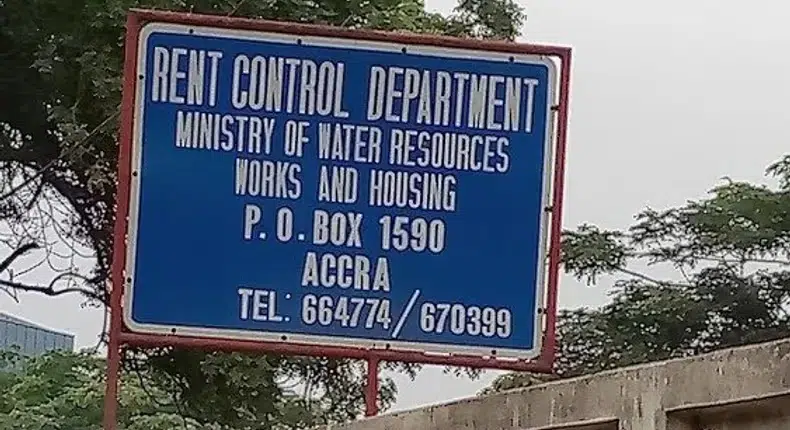
The Secretary-General of the Ghana Federation of Labour (GFL), Abraham Koomson, has cautioned that the Rent Control Department’s approach to regulating hostel charges at public universities could affect the quality of higher education if the financial challenges confronting tertiary institutions are not properly considered.
Speaking during a panel discussion on Ahotor 92.3 FM’s Adekyee Mu Nsem morning show, hosted by Nana Dogbe, Mr Koomson argued that university education comes with significant financial obligations globally, covering both academic fees and accommodation costs. He noted that scholarship beneficiaries are often exempted from some of these financial burdens.
He observed that successive governments in Ghana have struggled to subsidise academic fees, while universities have largely been left to shoulder the responsibility of providing and maintaining student accommodation.
According to him, this has placed considerable financial pressure on tertiary institutions, many of which are struggling to maintain existing infrastructure and secure the resources needed to construct additional hostel facilities.
Mr Koomson said internally generated funds have not been sufficient to enable universities to undertake major accommodation projects, making it necessary for authorities to understand their financial circumstances before introducing measures to regulate hostel charges.
He expressed concern over what he described as threats by the Rent Control Department to sanction educational institutions charging accommodation fees to sustain their operations, arguing that university administrations should first be engaged to explain the financial realities behind the charges.
He urged the Rent Control authorities to consult university management, particularly estate management departments, to establish the actual cost of maintaining hostel facilities and the factors informing accommodation charges.
Mr Koomson further argued that authorities must adopt a consultative approach rather than pursue what he described as a populist response to students’ accommodation concerns.
Citing the University of Ghana as an example, he said he was familiar with some of the institution’s challenges because his children and grandchildren are pursuing their education at various universities.
He specifically drew attention to outstanding bank loans secured to finance hostel construction at the University of Ghana, as well as legal disputes surrounding some of the projects.
According to him, these financial obligations make it difficult for the university to maintain its accommodation facilities while meeting other institutional responsibilities.
He warned that imposing rental restrictions without taking such outstanding financial commitments into account could worsen the operational challenges facing universities.
The GFL Secretary-General maintained that government must take a more active role in addressing student accommodation challenges through financial support, expansion of hostel infrastructure and accommodation assistance for scholarship beneficiaries.
He stressed that efforts to make university accommodation affordable must not undermine the financial sustainability of tertiary institutions or compromise the quality of higher education in the country.
Mr Koomson therefore called on the Rent Control Department to engage university authorities and develop a reasonable regulatory framework that considers the financial realities of educational institutions before imposing sanctions.
Story by Stephen Kwaku Owusu Mintah


