
The Ghana Meteorological Agency (GMet) has warned Ghanaians to brace for heavier and more frequent rains in the coming weeks as the country gradually enters the peak of the rainy season.
Joseph Tetteh Portuphy, Deputy Director in charge of Forecasting at GMet, said recent rainfall patterns indicate that the country is only experiencing the beginning of what is expected to become a more intense rainy season, particularly from June.
Speaking in an interview, Mr. Portuphy attributed the changing weather conditions partly to the effects of climate change, noting that Ghana experienced a weaker Harmattan season this year.
“It is very usual because it is ushering us into the main rainy season, and if you look at this year, we did not experience much of the Harmattan. The hazy conditions and the cold temperatures were not as intense, and that is one of the things climate change is bringing to us,” he stated.
“So we should brace ourselves. Once this has started, it is ushering us into the rainy season, meaning more rains are expected. This is just the beginning.”
According to him, the real intensity of the rainy season is expected to become evident in June, and residents in flood-prone communities must begin taking precautionary measures immediately.
“I believe by June we should see the full reality of the rains, and therefore we should prepare ourselves,” he cautioned.
“Everybody knows where they live and how their communities look when it rains, especially those of us living in low-lying areas and near waterways. We should make sure we move to safer places temporarily if necessary and return after the rains.”
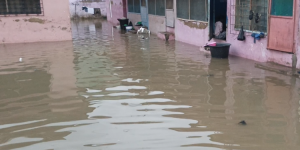
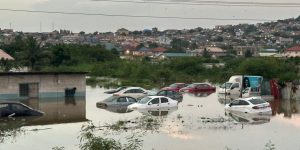
His comments come after heavy rains hit parts of the Greater Accra Region on Friday, May 22, causing widespread flooding, submerging homes, displacing residents, and leaving motorists stranded on major roads.
Reports from affected communities showed houses inundated with floodwaters, particularly in Alajo, where several residents were forced to flee their homes following the downpour.
Other areas, including Mallam, Baah Yard, SCC, and Dansoman, also recorded varying levels of flooding, resulting in severe disruptions to vehicular and pedestrian movement.
Motorists in several locations struggled to navigate waterlogged roads as traffic congestion built up across major routes during the evening rush hour.
Residents affected by the floods reported the destruction of household items, electrical appliances, and other personal belongings.
Lessons from the Floods
The recent floods that submerged parts of Accra and several other cities across Ghana have once again exposed a painful reality: as a nation, Ghana often waits for disasters to occur before taking action.
Every rainy season, lives are lost, properties destroyed, businesses disrupted, and families displaced. Yet once the floodwaters recede, public attention gradually fades until another tragedy strikes.
The question many Ghanaians continue to ask is whether there is a lesson to learn from these recurring floods.
The answer is yes — and the lessons are many.
One major lesson is that poor urban planning comes at a heavy cost. Over the years, buildings have been allowed to spring up on waterways, wetlands, and drainage paths. In many communities, gutters meant to carry stormwater have either been choked with plastic waste or covered for commercial activities. Nature always finds its course, and when heavy rains fall, blocked waterways quickly turn streets and homes into rivers.
Another important lesson is that sanitation remains a major national challenge. Indiscriminate dumping of refuse into drains and open spaces continues despite repeated warnings from authorities. Floods are not caused by rainfall alone; human behavior significantly contributes to the destruction witnessed every year. No city can function effectively when drainage systems are treated as dumping grounds.
The floods have also exposed weaknesses in law enforcement and urban management. Ghana has enough environmental and building regulations, but enforcement remains inconsistent. Illegal structures continue to appear in flood-prone areas, often due to political interference, corruption, and weak institutional action.
Climate change is another factor Ghana can no longer ignore. Rainfall patterns have become increasingly intense and unpredictable, meaning cities must now prepare for stronger storms and heavier downpours than in previous decades. Unfortunately, much of the country’s infrastructure is not designed to withstand these changing weather conditions.
However, beyond blaming authorities, citizens also have responsibilities. National development cannot succeed without public discipline. Keeping surroundings clean, respecting environmental regulations, and supporting community sanitation efforts are responsibilities every Ghanaian must take seriously.
The recurring floods should also compel government and policymakers to invest in long-term solutions instead of temporary responses. Expanding drainage systems, regularly desilting gutters, protecting wetlands, enforcing building regulations, and improving waste management systems are no longer optional — they are essential.
Importantly, emergency response systems must also be strengthened. Many flood victims continue to complain about delayed rescue efforts and inadequate support during disasters. Ghana needs better preparedness, stronger early warning systems, and coordinated disaster management strategies to minimize casualties and destruction.
There is also an economic lesson to learn. Floods affect businesses, transportation, education, healthcare delivery, and livelihoods. The financial losses suffered every year could otherwise be invested in national development projects. Preventing floods is far less costly than rebuilding after destruction.
Perhaps the biggest lesson is that development without planning is dangerous. A modern city should not only be measured by tall buildings and busy roads, but also by its ability to protect lives and property during emergencies.
The floods in Accra and other cities must not become just another headline that fades after a few days. They should serve as a wake-up call to both leaders and citizens. If the right lessons are learned and acted upon, Ghana can build safer, cleaner, and more resilient cities for future generations.
The time to act is now — before the next rainfall brings another national tragedy.