
The Minister for Roads and Highways, Governs Kwame Agbodza, has disclosed that more than 2,000 kilometres of roads are currently under construction at various stages across the country as part of the government’s infrastructure development agenda.
While the Roads Minister outlined ongoing efforts by the administration of President John Dramani Mahama to improve the country’s road network and address long-standing infrastructure challenges.
Agbodza used the occasion to also challenge claims previously made by former President Nana Addo Dankwa Akufo-Addo regarding the number of roads constructed during the eight-year tenure of the previous New Patriotic Party (NPP) administration.
According to him, assertions that nearly 18,000 kilometres of roads were completed under the Akufo-Addo government do not reflect the actual records available within the roads sector.
“Currently, over 2,000 kilometres of roads are being constructed. This is not fiction, unlike what President Nana Addo Dankwa Akufo-Addo did in Parliament when he did in one of his State of the Nation Addresses and pretended that he built almost 18,000 kilometres of roads.”
The Roads and Highways Minister argued that there is insufficient evidence to support the former president’s claims about completed road infrastructure projects during his administration.
The sound of bulldozers roaring before sunrise has become a familiar part of life in many growing cities and towns. Across the country, major road construction projects are transforming highways, expanding urban roads, and reshaping transport systems in the name of development. Governments celebrate these projects as signs of progress, promising reduced congestion, improved trade, and better connectivity.
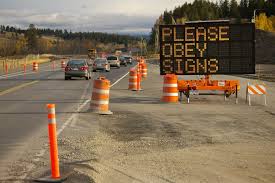
But beneath the excitement of new infrastructure lies another reality — one filled with traffic confusion, pedestrian danger, accidents, public frustration, and enormous pressure on contractors responsible for delivering these projects safely.
For contractors, road construction is not simply about pouring asphalt and moving heavy machines. It is a daily balancing act between engineering progress and protecting human lives.
Construction Zones: Development’s Most Dangerous Spaces
Road construction sites are among the most hazardous public environments. Heavy trucks move alongside private vehicles. Pedestrians squeeze through narrow pathways beside deep excavations. Traffic diversions confuse drivers unfamiliar with changing road layouts.
Contractors working on major projects often face criticism from the public whenever congestion increases or accidents occur. Yet many argue that the public rarely sees the complexity involved in managing active construction zones while keeping roads operational.
“People only see delays and dust,” one site engineer explained during a recent visit to a highway expansion project. “What they do not see is the amount of planning required every single day to prevent accidents.”
Every stage of road construction introduces risk. Excavations weaken road shoulders. Temporary diversions create sharp turns. Poor weather reduces visibility. At night, construction equipment and uneven surfaces become even more dangerous.
Without proper management, these conditions can quickly turn deadly.

Pedestrians: The Most Vulnerable Victims
Among all road users, pedestrians suffer the greatest danger during road construction.
In crowded urban areas, sidewalks are often blocked by equipment, building materials, or drainage works. As a result, pedestrians — including school children, traders, elderly people, and persons with disabilities — are forced onto active roads shared with speeding vehicles.
Contractors admit this is one of their biggest challenges.
In busy commercial areas, construction space is limited. Engineers must simultaneously create room for machinery, moving traffic, drainage systems, and pedestrian movement. In some locations, there is simply not enough physical space to separate all users safely.
This problem becomes worse when pedestrians ignore designated walkways and attempt to cross directly through work zones.
To reduce the risk, contractors increasingly rely on temporary pedestrian corridors, warning signs, reflective barriers, and traffic marshals who help guide people safely across dangerous sections.
Night-time safety has also become a growing concern. Poor lighting around construction sites contributes significantly to accidents involving both motorists and pedestrians. Contractors now invest heavily in floodlights, reflective signage, and illuminated barriers to improve visibility after dark.
Still, accidents continue to happen.
Managing Traffic in the Middle of Construction
Perhaps the most visible impact of road construction is traffic congestion.
Drivers trapped for hours in slow-moving queues often blame contractors for poor planning. However, contractors argue that maintaining traffic flow while rebuilding major roads is one of the most technically difficult parts of any infrastructure project.
Closing roads completely is rarely an option, especially in large cities where thousands of vehicles rely on the same transport corridors every day.
Instead, contractors must develop detailed traffic management plans before work begins. These plans include diversion routes, temporary lane arrangements, road signage, and schedules for high-risk activities.
In some projects, work is divided into phases so sections of the road remain operational while others are under construction. Contractors also increasingly perform heavy works at night or during off-peak hours to reduce public disruption.
Modern technology is beginning to play a role as well. Some projects now use electronic message boards, CCTV systems, and smart traffic signals to monitor congestion and warn drivers about changing road conditions ahead.
But even the best traffic systems cannot entirely eliminate the tension between construction work and public mobility.
The Hidden Cost of Safety
For contractors, safety comes at a high financial cost.
Road signs, barriers, temporary walkways, lighting systems, safety officers, and emergency response teams require substantial investment. In many cases, contractors say the public underestimates how much of a project budget is spent simply on keeping people safe.
Safety failures can be devastating.
A single serious accident can delay work, trigger lawsuits, damage a contractor’s reputation, and increase project costs significantly. As a result, many contractors now conduct daily safety inspections and regular worker training sessions to reduce risks.
Before major activities begin, site managers perform risk assessments to identify possible hazards ranging from vehicle collisions to equipment failures.
Workers are required to wear protective clothing, helmets, reflective jackets, gloves, and safety boots. Construction equipment must also be inspected regularly to avoid mechanical failures that could endanger workers or the public.
When Accidents Happen
Despite extensive precautions, accidents remain an unfortunate reality of many major road projects.
When crashes occur inside construction zones, contractors are expected to respond immediately. Emergency teams provide first aid, secure the accident scene, and coordinate with police, ambulance services, and fire officers.
Investigations usually follow to determine what went wrong.
Was there enough signage? Were traffic diversions clear? Was speeding involved? Did poor lighting contribute to the crash? Was the contractor fully compliant with safety regulations?
These questions often determine both legal responsibility and future safety improvements.
In many cases, contractors adjust traffic arrangements, increase supervision, or install additional warning systems after serious incidents.
A Shared Responsibility
While contractors carry significant responsibility, experts argue that road safety during construction cannot depend on contractors alone.
Drivers who ignore speed limits, pedestrians who bypass safety barriers, and impatient motorists who overtake recklessly in narrow lanes also contribute heavily to construction-zone accidents.
Road safety authorities, traffic police, local governments, and community leaders all play important roles in educating the public and enforcing regulations.
Infrastructure experts say successful road construction requires cooperation between contractors and the communities affected by the projects.
“The goal is not just to build roads,” a transport consultant noted. “The goal is to build them without losing lives in the process.”
Development Without Sacrifice
As the country continues investing heavily in transport infrastructure, the pressure on contractors will only increase.
Citizens demand faster roads, smoother traffic flow, and modern urban systems. Governments demand timely project delivery. Businesses expect uninterrupted movement of goods and services.
Yet amid the urgency of development, one reality remains clear: road construction must never prioritize speed over safety.
For contractors standing behind the barricades and machinery every day, the challenge is no longer simply constructing roads. It is managing human movement, protecting vulnerable pedestrians, preventing accidents, and ensuring that national development does not come at the cost of public safety.
Because in the end, the success of a road project is measured not only by the quality of the asphalt laid, but by how many lives are protected while the work is being done.