


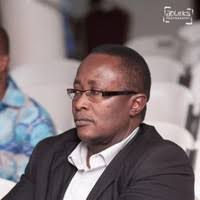
Isaaka Amon Kotei, a local governance expert and political analyst, has questioned the proposal for the popular election of Metropolitan, Municipal and District Chief Executives (MMDCEs), arguing that the reform could create serious constitutional and administrative challenges if the relationship between elected MMDCEs and the President is not clearly defined.
Speaking on the proposed constitutional reforms and the planned referendum, Mr. Amon Kotei said Ghana must carefully examine the implications of transferring greater political authority to elected MMDCEs within the country’s existing unitary system of government.
He explained that Ghanaians elect the President as the executive head of the country, while the President appoints Regional Ministers to represent and coordinate the activities of the central government across the 16 regions.
According to him, Regional Ministers play an important role in monitoring and coordinating the work of the assemblies and ensuring that central government policies are implemented at the regional level.
He therefore questioned where the President’s constitutional authority would stand if MMDCEs were directly elected by the people and subsequently became accountable primarily to their local electorate.
«“If you say the President should take his eyes off the assemblies, then what are you implying? You see where the confusion is?”»
Mr. Amo Kotei argued that a directly elected MMDCE could potentially challenge the authority of a Regional Minister because the MMDCE would have a direct mandate from the people.
He questioned who would effectively supervise an MCE who could argue that he or she had been elected directly by the people and therefore had a separate electoral mandate.
He said the situation could become even more complicated because Regional Ministers are appointed by the President and therefore derive their authority from the central government.
According to him, if elected MMDCEs refuse to recognise the authority of Regional Ministers, the country could face serious coordination and accountability challenges between central and local government.
Mr. Amon Kotei cautioned that Ghana should not adopt the popular election of MMDCEs simply because other countries use similar systems.
He said every country has its own constitutional and administrative arrangements, adding that Ghana must develop a local governance model that fits its own unitary system.
He further argued that Ghana has not yet reached the stage where the central government should completely relinquish its supervisory role over district assemblies without first putting adequate checks and balances in place.
He warned that giving substantial power to an elected MMDCE without clearly defined mechanisms of supervision and accountability could create opportunities for some office holders to abuse their authority for personal or political interests.
Mr. Amon Kotei stressed that he supports the referendum process but does not support the popular election of MMDCEs as currently proposed.
He said the referendum and the proposed MMDCE elections should not be confused, stressing that the two issues are fundamentally different.
«“I agree with the referendum, but I don’t side with the popular election.”»
He also questioned what would happen if a number of elected MMDCEs in different parts of the country formed a powerful bloc and succeeded in mobilising significant public support.
He said such a development could potentially make it difficult for the central government to effectively coordinate local administration if there were no clear constitutional controls.
Mr. Amon Kotei therefore called for further reflection and broader expert input into the constitutional reform process.
He suggested that the Constitutional Review Committee could have benefited from the inclusion of a political science lecturer or other experts with specialised knowledge of political and constitutional systems.
He urged Ghanaians to “think aloud” about the possible consequences of the proposed reforms before making a final decision.
He maintained that constitutional reform must not only focus on the immediate benefits of a proposal but also consider how the system will function in practice and the possible consequences for Ghana’s governance structure in the long term.
He was speaking with Citizen Kofi Owusu on Ahotor FM’s Adekyee Mu Nsem on Tuesday, 18th August 2026.
Story by Stephen Kwaku Owusu Mintah/Ahotoronline/Accra.


